

The Role of Enzymes in High-Bather Load Pools: Benefits and Effective Maintenance Strategies
Enzymes play a crucial role in maintaining the quality of water in high-bather load pools, which are often subjected to increased organic contaminants. These biological catalysts enhance water clarity and overall pool hygiene by breaking down various pollutants, including oils, lotions, and other organic matter. This article will explore the mechanisms by which enzymes improve water quality, their effectiveness in removing specific contaminants like sunscreen, and best practices for their application in pool maintenance. Additionally, we will discuss why choosing a professional service like Peaster Pools can optimize enzyme-based maintenance strategies in Parker County, Texas.
What Are Pool Enzymes and How Do They Improve Water Clarity?
Pool enzymes are specialized proteins that facilitate the breakdown of organic contaminants in pool water, leading to improved clarity and hygiene. They work by catalyzing chemical reactions that convert complex organic materials into simpler, non-toxic substances. This process not only enhances water clarity but also reduces the need for harsh chemicals, making pool maintenance more environmentally friendly. The use of enzymes is particularly beneficial in high-bather load pools, where the accumulation of organic matter can quickly degrade water quality.
How Do Enzymes Break Down Organic Contaminants in Pools?
Enzymes break down organic contaminants through a process called hydrolysis, where they cleave the bonds in complex molecules. For instance, enzymes can effectively target oils, proteins, and carbohydrates found in sweat, skin cells, and other debris introduced by swimmers. By converting these substances into smaller, more manageable compounds, enzymes help maintain a cleaner and clearer pool environment. This enzymatic action not only improves aesthetic quality but also contributes to a healthier swimming experience.
Further research highlights the specific microbial mechanisms and genetic factors that enable enzymes to effectively break down various organic pollutants.
Microbial Enzymes for Eco-Friendly Organic Pollutant Degradation
Whereas microbial-based degradation of organic pollutants provides an edge, they are usually cost-effective and take an eco-friendly approach towards remediation. Bacterial species, includingPseudomonas,Comamonas,Burkholderia, andXanthomonas, have the unique genetic makeup to metabolically degrade toxic pollutants, conferring their survival in toxic environments. Several catabolic genes, such asalkB,xylE,catA, andnahAc, that encode enzymes and allow bacteria to degrade organic pollutants have been identified, characterized, and even engineered for better efficacy.
Bacterial enzymatic degradation of recalcitrant organic pollutants: catabolic pathways and genetic regulations, S Kumari, 2023
Why Are Enzymes Essential for Maintaining High-Bather Load Pools?
In high-bather load pools, the volume of organic contaminants can overwhelm traditional sanitation methods, leading to cloudy water and potential health risks. Enzymes are essential in these scenarios as they provide a proactive approach to water maintenance. They help mitigate the effects of high bather loads by continuously breaking down organic matter, thus preventing the buildup of harmful substances. This proactive maintenance strategy ensures that pool water remains safe and inviting for all users.
How Do Enzymes Help Remove Sunscreen and Other Organic Pollutants?
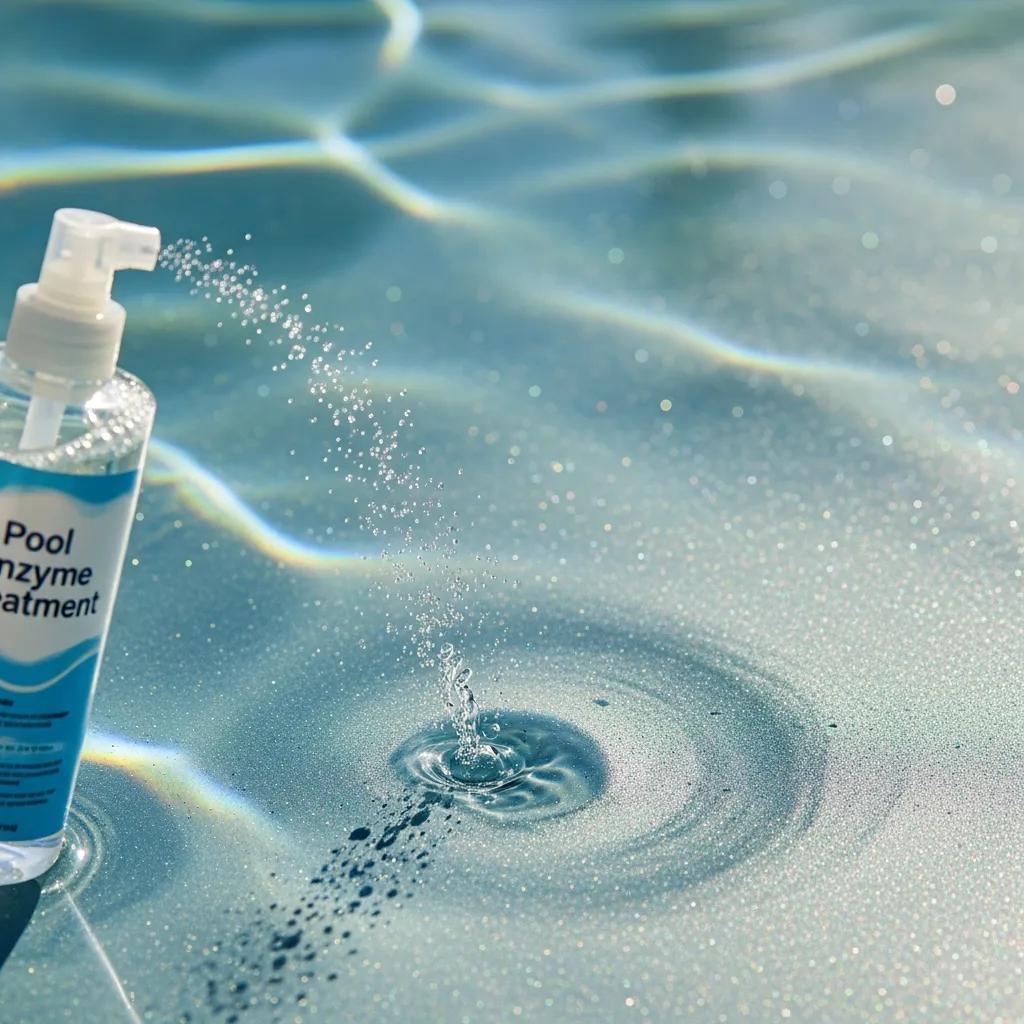
Enzymes are particularly effective at removing sunscreen and other organic pollutants that can cloud pool water and create a film on surfaces. These contaminants often contain complex chemical structures that can be challenging to eliminate with standard chlorine treatments alone. Enzymatic treatments target these substances, breaking them down into harmless byproducts that can be easily filtered out.
What Types of Sunscreen Contaminants Affect Pool Water Quality?
Common sunscreen ingredients, such as oxybenzone and octinoxate, can significantly impact pool water quality. These compounds not only contribute to water cloudiness but can also react with chlorine, reducing its effectiveness. By utilizing enzymes, pool owners can effectively break down these contaminants, ensuring that the water remains clear and safe for swimmers.
How Effective Are Enzymatic Treatments Compared to Traditional Chemicals?
Enzymatic treatments offer several advantages over traditional chemical methods. While chlorine and other chemicals can sanitize water, they often fail to address the underlying organic contaminants that contribute to water quality issues. Enzymes, on the other hand, specifically target and break down these substances, leading to more effective and sustainable pool maintenance. Studies have shown that pools treated with enzymes exhibit clearer water and reduced chemical usage, making them a preferred choice for environmentally conscious pool owners.
What Are the Best Practices for Applying Enzyme Treatments in Texas Pools?
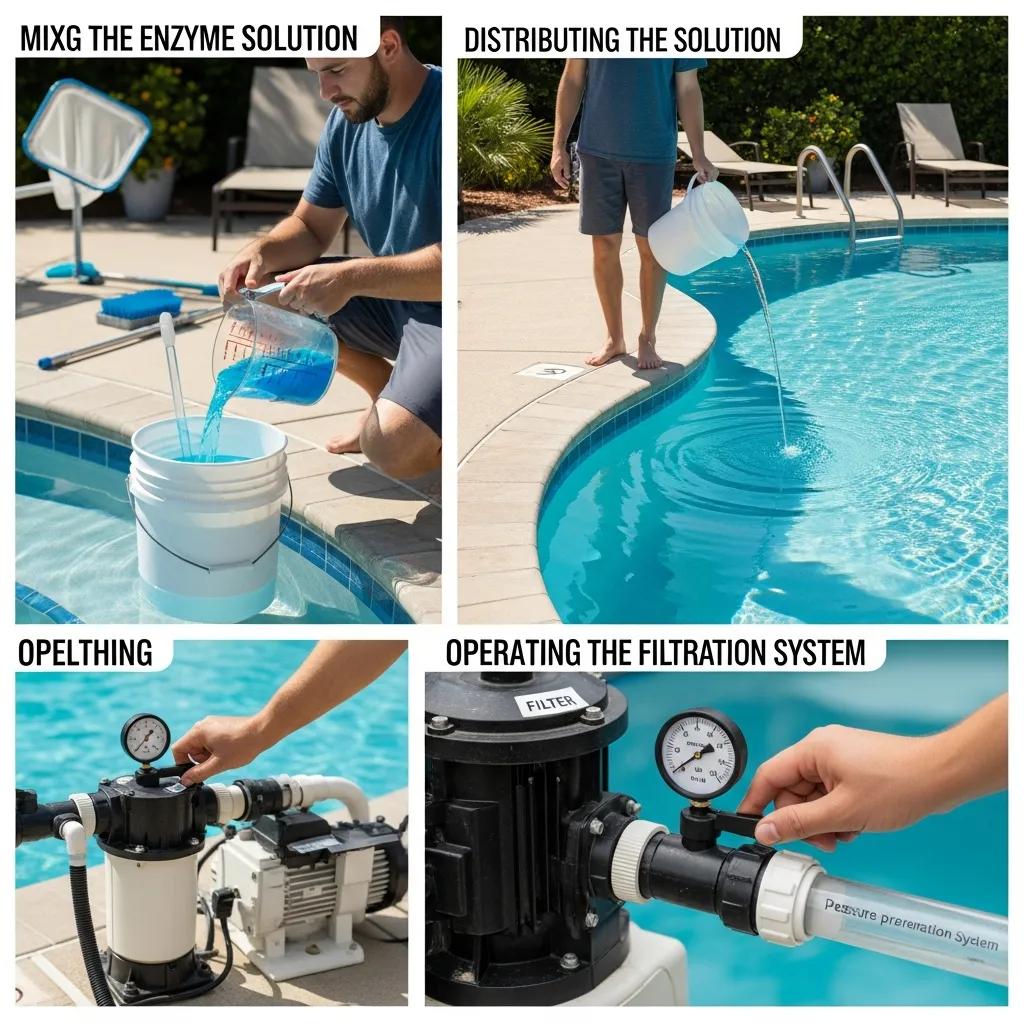
To maximize the benefits of enzyme treatments, it is essential to follow best practices for application. This includes understanding the specific needs of your pool and the types of contaminants present.
How Often Should Enzyme Treatments Be Applied for Optimal Results?
For optimal results, enzyme treatments should be applied regularly, typically every 1-2 weeks, depending on bather load and environmental factors. Regular application helps maintain consistent water quality and prevents the accumulation of organic matter. Pool owners should monitor water clarity and adjust the frequency of enzyme treatments as needed to ensure optimal performance.
What Are the Recommended Dosage and Application Steps for Enzymatic Pool Maintenance?
The recommended dosage for enzyme treatments varies by product, but a general guideline is to use 1 ounce of enzyme solution per 10,000 gallons of water. Application steps typically include:
- Pre-dilution: Mix the enzyme solution with water before adding it to the pool.
- Distribution: Pour the diluted solution evenly around the pool’s perimeter.
- Filtration: Allow the pool’s filtration system to run for at least 24 hours to ensure thorough mixing and breakdown of contaminants.
Following these steps will enhance the effectiveness of enzyme treatments and contribute to a cleaner pool environment.
Why Choose Peaster Pools for Enzyme-Based Maintenance in Parker County, Texas?
Peaster Pools specializes in providing enzyme-based maintenance solutions tailored to the unique challenges faced by pool owners in Parker County, Texas. With a focus on high-quality service and customer satisfaction, Peaster Pools ensures that your pool remains in optimal condition throughout the swimming season.
How Does Peaster Pools Address Local Water Quality Challenges with Enzymes?
Peaster Pools understands the specific water quality challenges that can arise in local environments, such as high mineral content and organic debris from surrounding vegetation. By utilizing enzyme treatments, they effectively address these issues, ensuring that pool water remains clear and safe for swimmers. Their expertise in local conditions allows them to customize maintenance plans that maximize the benefits of enzymatic treatments.
What Certifications and Customer Ratings Support Peaster Pools’ Reliability?
Peaster Pools has garnered positive customer feedback and maintains a strong reputation in the community for their reliable pool maintenance services. Their commitment to quality and customer satisfaction is reflected in their high ratings and testimonials from satisfied clients. Choosing Peaster Pools for enzyme-based maintenance ensures that you receive professional service backed by local expertise.